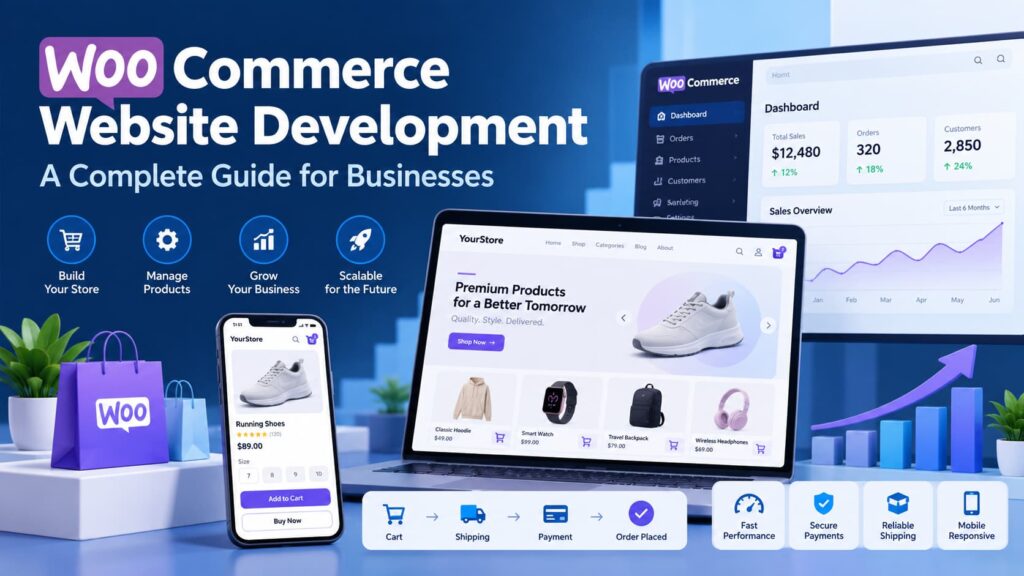
Building an ecommerce website involves more than adding products and connecting a payment gateway. Your store needs to load quickly, work smoothly on mobile devices, make products easy to discover, provide a simple checkout experience, and support your business as it grows.
WooCommerce is a popular option for businesses that want to build an online store using WordPress. It gives businesses considerable flexibility over design, functionality, product management, payments, shipping, and integrations.
However, getting the most from the platform often requires careful planning and development. Working with an experienced WooCommerce development company can help businesses create an ecommerce website that fits their operational needs rather than relying entirely on a standard template.
This guide explains what WooCommerce development involves, its key benefits, important features, development costs, and what businesses should consider before launching their online store.
What Is WooCommerce?
WooCommerce is an ecommerce platform built for WordPress. It transforms a standard WordPress website into an online store where businesses can sell physical products, digital products, subscriptions, and other offerings.
The platform provides essential ecommerce functionality such as:
- Product and inventory management
- Shopping carts
- Checkout pages
- Payment integrations
- Shipping options
- Discount codes
- Tax settings
- Order management
- Customer accounts
- Product variations
One reason businesses choose WooCommerce is flexibility. Store owners can customise the appearance and functionality of their websites using themes, plugins, integrations, and custom development.
This makes WooCommerce suitable for businesses ranging from small online stores to established brands with more complex ecommerce requirements.
Why Do Businesses Choose WooCommerce?
Choosing an ecommerce platform is an important business decision. The platform has to support not just your present requirements but also your future plans.
Here are some of the reasons businesses consider WooCommerce.
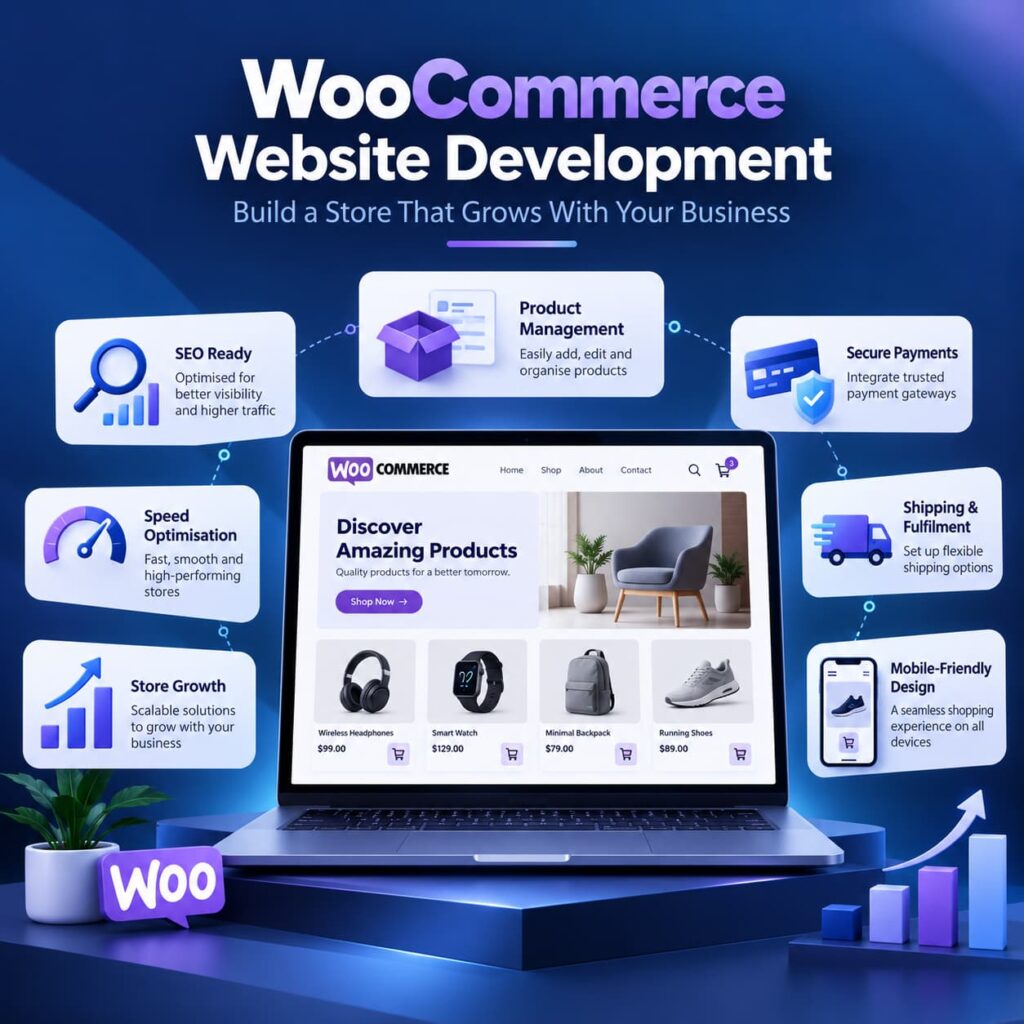
1. Greater Control Over the Website
WooCommerce runs on WordPress, giving businesses considerable control over their website structure, content, design, and functionality.
Unlike highly restricted hosted platforms, WooCommerce allows developers to modify many areas of the store according to the business’s requirements.
A skilled WooCommerce development company can use this flexibility to build customized shopping experiences rather than forcing the business into a predefined structure.
2. Flexible Design Options
Your ecommerce store should reflect your brand.
WooCommerce can be used with ready-made themes or custom designs. Businesses can customize product pages, category layouts, navigation, checkout flows, landing pages, and other elements.
Custom WooCommerce development is particularly useful when a business has specific branding or functionality requirements that cannot easily be handled by an off-the-shelf theme.
3. Easy Content Management
Because WooCommerce works with WordPress, businesses can manage both ecommerce and content from the same system.
You can publish:
- Blog articles
- Buying guides
- Product comparisons
- FAQs
- Landing pages
- Category content
- Educational resources
This is particularly helpful for businesses using content marketing and SEO to attract potential customers.
4. Wide Range of Integrations
WooCommerce supports integrations with numerous tools and services related to payments, shipping, accounting, marketing, analytics, CRM, inventory, and customer support.
However, installing too many plugins without proper evaluation can create compatibility or performance problems. A professional WooCommerce developer can help determine which integrations are genuinely necessary.
What Does WooCommerce Website Development Include?
WooCommerce website development covers much more than installing the WooCommerce plugin.
A professional development project normally includes several stages.
Business and Requirement Analysis
The first step is understanding how the business operates.
A WooCommerce development company may assess factors such as:
- Number of products
- Product types
- Customer journey
- Shipping requirements
- Payment methods
- Inventory management
- Tax requirements
- Third-party integrations
- Marketing requirements
- Expected website traffic
This information helps determine how the website should be structured.
Website Planning and Architecture
Once the requirements are understood, the website structure can be planned.
This includes deciding how customers will navigate between:
- Homepage
- Product categories
- Product pages
- Offers
- Cart
- Checkout
- Customer accounts
- Blog or resource pages
Good architecture is important for usability as well as search engine optimization.
WooCommerce Web Design
The next step involves creating the visual experience.
A professional WooCommerce web design should balance branding with usability. The website should look polished while keeping the buying journey simple.
Important design considerations include:
- Clear navigation
- Readable typography
- Strong product imagery
- Visible calls to action
- Easy-to-find product information
- Mobile responsiveness
- Simple checkout flow
The goal is not to add unnecessary design elements. It is to help customers move confidently from browsing to purchasing.
Essential Features of a WooCommerce Store
The exact functionality will depend on the business, but most professional ecommerce stores need several fundamental features.
Product Search and Filtering
Customers should be able to find relevant products quickly.
Depending on the store, filters may include:
- Price
- Size
- Colour
- Brand
- Category
- Availability
- Product attributes
Effective filtering becomes increasingly important as the catalogue grows.
Secure and Convenient Payments
Customers expect familiar and convenient payment options.
A WooCommerce store may support methods such as cards, UPI, net banking, wallets, or cash on delivery, depending on the target market and payment gateway.
Your WooCommerce website development team should ensure that the checkout and payment process works smoothly across devices.
Shipping Options
Shipping requirements differ widely between businesses.
Some stores offer:
- Flat-rate shipping
- Free shipping above a certain order value
- Location-based charges
- Weight-based shipping
- Local delivery
- Store pickup
These rules should be configured clearly so customers understand delivery costs before completing their order.
Inventory Management
WooCommerce allows businesses to track stock levels and manage product availability.
For businesses using external inventory or enterprise systems, additional integrations may be required to synchronize product data.
Order and Customer Management
Store administrators need an easy way to manage orders, update order statuses, communicate with customers, and review purchasing information.
This becomes increasingly important as sales volumes grow.
Why Mobile-Friendly WooCommerce Development Matters
Many customers browse and shop using smartphones.
Your ecommerce site therefore needs to perform well on smaller screens.
A responsive WooCommerce store should provide:
- Easy mobile navigation
- Readable product information
- Large enough buttons
- Mobile-friendly forms
- Fast-loading images
- Simple cart management
- Smooth checkout
Choosing a WooCommerce development company that considers mobile usability from the beginning can help avoid problems that are difficult to fix after launch.
Responsive design should not simply shrink the desktop website. The entire shopping experience should work naturally on mobile devices.
WooCommerce Development and SEO
Building an ecommerce site without considering SEO can make organic growth more difficult later.
SEO-friendly WooCommerce development should consider elements such as:
- Website architecture
- Clean URLs
- Product category structure
- Internal linking
- Heading hierarchy
- Image optimization
- Page speed
- Mobile usability
- Crawlability
- Schema markup
- Product descriptions
For example, products should be organized into logical categories that help both customers and search engines understand the site.
Similarly, optimizing category pages can help businesses target broader commercial search terms rather than relying exclusively on individual product pages.
A well-structured ecommerce website provides a stronger foundation for future WooCommerce SEO activities.
WooCommerce Website Speed and Performance
Speed is particularly important for ecommerce websites.
Online stores often contain numerous images, scripts, plugins, tracking tools, and dynamic features. Without careful optimization, these can slow the website down.
A professional WooCommerce development company may improve performance through measures such as:
- Image compression
- Caching
- Code optimization
- Database optimization
- Appropriate hosting
- Careful plugin selection
- Content delivery networks where appropriate
- Removing unnecessary scripts
Performance should be considered throughout development rather than treated as a final checklist item.
Custom WooCommerce Development vs Ready-Made Themes
One of the biggest decisions businesses face is whether to use an existing theme or invest in custom WooCommerce development.
Ready-Made Themes
Ready-made themes can be useful when:
- The budget is limited
- The store is relatively simple
- Standard functionality is sufficient
- A faster launch is required
They can significantly reduce development time.
However, businesses may need to compromise on certain design or functionality requirements.
Custom WooCommerce Development
A custom approach offers more control over:
- Branding
- User experience
- Product layouts
- Checkout experiences
- Integrations
- Performance
- Special functionality
Custom development generally requires a larger investment, but it may provide better long-term flexibility for businesses with specific requirements.
The right choice depends on your goals rather than simply choosing whichever approach costs less.
How Much Does WooCommerce Website Development Cost?
There is no single price for building a WooCommerce website.
Costs depend on factors such as:
- Number of pages
- Number and complexity of products
- Custom design requirements
- Theme development
- Payment integrations
- Shipping configuration
- Custom functionality
- Third-party integrations
- Product migration
- SEO requirements
- Testing
- Maintenance
A basic ecommerce website using an existing theme will usually require less development than a heavily customized store with complex workflows and integrations.
When requesting quotations, compare what each agency includes instead of looking only at the final price.
How to Choose a WooCommerce Development Company
Choosing the right development partner can have a significant impact on the quality and maintainability of your store.
Before hiring a WooCommerce development company, consider the following factors.
Review Their WooCommerce Portfolio
Look for ecommerce projects rather than just general business websites.
Explore the actual sites and assess their navigation, mobile experience, product presentation, speed, and checkout process.
Ask About Custom Development Experience
Find out whether the team can handle custom requirements or mainly works with ready-made themes and plugins.
This becomes important if your requirements become more sophisticated later.
Check Their Understanding of SEO
Your developer does not necessarily need to manage your SEO campaign, but the website should provide a technically sound foundation for optimization.
Understand Their Development Process
A reliable WooCommerce website development company should be able to explain how it handles planning, design, development, testing, revisions, and launch.
Ask About Post-Launch Support
WooCommerce stores require regular maintenance.
Ask whether the agency provides assistance with:
- Updates
- Backups
- Security
- Plugin issues
- Performance
- Troubleshooting
Ongoing technical support can be particularly valuable for businesses that do not have an internal development team.
Common WooCommerce Development Mistakes to Avoid
Even a feature-rich store can struggle if basic development decisions are poor.
Some common mistakes include:
- Installing too many unnecessary plugins
- Using a poorly coded theme
- Ignoring mobile usability
- Creating complicated navigation
- Overloading product pages
- Using oversized images
- Neglecting website speed
- Making checkout unnecessarily complicated
- Ignoring SEO during development
- Launching without proper testing
Working with an experienced WooCommerce development company can help businesses make more informed technical decisions from the beginning.
Conclusion
WooCommerce gives businesses a flexible foundation for building and managing an ecommerce website, but the quality of the final store depends greatly on how it is planned, designed, and developed.
A successful WooCommerce website should combine attractive design with intuitive navigation, strong mobile performance, secure payments, effective product management, good speed, and an SEO-friendly structure.
Before starting your project, clearly define what your business needs today and what it may require as it grows. This will help you choose the right technology, functionality, and development approach.
If you are looking for a WooCommerce development company that understands WordPress, ecommerce functionality, responsive web design, and SEO fundamentals, Wrebb Digital Solutions can help you build a WooCommerce store aligned with your business requirements and long-term growth plans.
The objective should not simply be to launch an online store. It should be to create an ecommerce platform that makes shopping easier for your customers and managing the business easier for your team.
Frequently Asked Questions
1. What is WooCommerce website development?
WooCommerce website development involves designing, configuring, and customizing an ecommerce store using WordPress and WooCommerce. It can include product setup, payments, shipping, checkout, integrations, responsive design, performance optimization, and custom functionality.
2. Is WooCommerce suitable for small businesses?
Yes. WooCommerce can work well for small businesses because stores can start with relatively simple functionality and expand as requirements grow. The best setup depends on the number of products, expected traffic, budget, and business processes.
3. Do I need a WooCommerce development company?
Businesses can set up simple WooCommerce stores themselves, but professional development becomes valuable when custom design, integrations, performance optimization, complex products, SEO considerations, or specialized functionality are required.
4. Can WooCommerce be customized?
Yes. WooCommerce provides considerable scope for customization. Developers can modify themes, product pages, checkout processes, integrations, shipping rules, and other functionality according to the business’s requirements.
5. Is WooCommerce SEO-friendly?
WooCommerce can provide a strong foundation for SEO when the website is structured and optimized properly. Factors such as URLs, categories, internal links, product content, page speed, mobile usability, and technical SEO all influence performance.
6. How long does it take to develop a WooCommerce website?
Timelines vary according to the size and complexity of the store. A relatively simple project may take a few weeks, while custom ecommerce stores with integrations, large catalogues, or complex functionality may take considerably longer.
7. What is the difference between WooCommerce and WordPress?
WordPress is a content management system used to build websites. WooCommerce is an ecommerce solution designed for WordPress that adds functionality such as products, carts, checkout, orders, payments, and inventory management.
8. Does a WooCommerce website require ongoing maintenance?
Yes. Regular maintenance can include WordPress and plugin updates, backups, security checks, performance monitoring, compatibility testing, and resolving technical issues that arise as the website evolves.